
Drug DUI Defense in Wasco
Defense Focused on Impairment & Toxicology Evidence
A drug DUI charge often turns on whether the evidence proves impairment while driving, not simply whether a substance appeared in a blood sample.
Middlebrook & Associates represents people facing drug DUI allegations after arrests in Wasco and throughout Kern County. We examine the driving evidence, officer observations, toxicology results, testing procedures, and other facts the prosecution may rely on to prove impairment.
Our drug DUI practice includes allegations involving marijuana, cocaine, methamphetamine, MDMA or ecstasy, prescription medications, and other substances that may affect driving ability. Richard Middlebrook has handled thousands of DUI matters, and our firm has been recognized as a Top 100 Lawyers in America firm for DUI Defense.
Get prompt guidance about your charge, driving privileges, and next steps. Call (661) 874-1325 or contact us online to discuss your case with our drug DUI attorneys in Wasco.
What California Must Prove in a Drug DUI Case
California Vehicle Code § 23152(f) makes it unlawful to drive while under the influence of any drug.
Unlike California's alcohol per-se law, § 23152(f) does not establish a single numerical drug concentration that automatically proves a drug DUI.
Instead, the issue is impairment.
A person is considered under the influence when a drug has affected the person's mental or physical abilities to the point that the person can no longer drive with the caution of a sober person using ordinary care under similar circumstances.
That makes the relationship between toxicology results and the person's actual condition at the time of driving especially important.
Our broader Wasco DUI defense practice addresses alcohol, drug, repeat-offense, accident-related, and other DUI allegations arising in the area.
Detection Does Not Automatically Prove Impairment
A laboratory finding can show that a drug or metabolite was detected, but detection and impairment are not necessarily the same question.
Depending on the substance, relevant issues may include:
- When the drug was allegedly used
- When the blood sample was collected
- The substance and metabolite identified
- The reported concentration
- The person's driving pattern
- Officer observations
- Statements and medical information
- Field sobriety observations
- Drug recognition evaluation findings
Some substances or metabolites may remain detectable after their most significant impairing effects have diminished. The significance of a toxicology result therefore depends on the drug, timing, analytical method, surrounding evidence, and expert interpretation.
Reviewing Blood & Toxicology Evidence
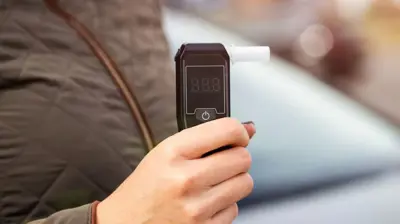
Blood evidence can play a central role in a DUID prosecution.
We examine how the sample was collected, stored, transported, tested, and reported. When appropriate, an independent toxicologist may evaluate the laboratory methods or available sample and provide scientific analysis relevant to the reported findings.
Potential issues may involve:
- Timing: Whether the interval between driving and sample collection affects what can reasonably be inferred about the driver's condition.
- Collection and handling: Whether the sample was collected, labeled, preserved, stored, and transferred properly.
- Laboratory analysis: Whether the testing method reliably identified and measured the substances reported.
- Interpretation: Whether the reported toxicology findings support the conclusions being drawn about impairment at the time of driving.
A testing or handling problem does not automatically make evidence inadmissible. Depending on the issue, it may affect the reliability, weight, or interpretation of the evidence. Separate constitutional or evidentiary issues may support a motion to exclude or suppress evidence when the legal requirements for such relief are met.
Our breath and blood testing practice provides additional information about how chemical-test evidence can be evaluated in California DUI cases.
Field Sobriety Tests in Drug DUI Investigations
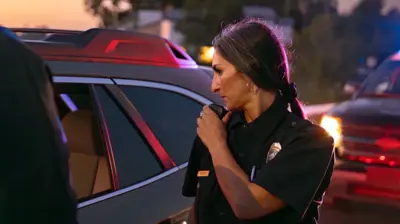
Officers may use field sobriety tests as part of a drug DUI investigation, but the observations must be evaluated in context.
The standardized field sobriety test battery was developed primarily in connection with alcohol-impaired driving and BAC assessment. Different drugs can produce different physical or behavioral effects, and not every substance produces the same signs.
We review the conditions in which testing occurred, the officer's instructions, the person's physical condition, how the officer documented performance, and whether the conclusions drawn from the observations are consistent with the remaining evidence.
A field sobriety result is one piece of the investigation, not a numerical drug-impairment threshold.
Contact us promptly to preserve your opportunity to challenge the evidence and request a timely DMV hearing. Call (661) 874-1325 or use our contact form to speak with our firm confidentially.

Why Choose Middlebrook & Associates?
-
38 Years of Collective Legal Experience
-
Over 250 DUI Trials Handled - With a 97.4% Success Rate
-
Handled More Than 8,500 DMV Hearings in Kern County
-
Expert Member of California DUI Lawyers Association
-
ACS-CHAL Forensic Lawyer - Scientist Designation
-
Teaches Lawyers & Scientists - DUIDLA, American Academy of Forensic Science & American Chemical Society
-
AV Rated by martindale.com - Leading Authority on Attorney Ratings
-
Founding & Board Member - DUI Defense Lawyers Association (DUIDLA)
-
Top 100 Lawyers in America - DUI Defense

.jpg.2603191432306.webp)